


Key Takeaways
- COPD is not contagious. It cannot spread through coughing, sneezing, touching, or close contact.
- It’s caused by long-term lung damage, mainly from smoking, pollution, or occupational exposure.
- People with COPD are more vulnerable to actual contagious illnesses because of their weakened lung function.
- Living with or caring for someone who has COPD is safe, as long as you help limit their exposure to smoke and infections.
- Vaccinations and good hygiene habits can protect COPD patients from the illnesses that pose a real risk to them.
In this blog, we’ll break down what COPD actually is, why it doesn’t spread between people, and what really causes it. We’ll also look at how it differs from contagious respiratory illnesses, plus answer the most common follow-up questions people search for, so you know exactly what to watch for and what you don’t need to worry about.
What Exactly Is COPD?
COPD stands for chronic obstructive pulmonary disease. It’s an umbrella term for a group of lung conditions, mainly emphysema and chronic bronchitis, that make it hard to breathe. Over time, the airways become inflamed and narrow, and the lungs lose some of their natural elasticity.
Unlike an infection, COPD develops slowly, often over many years. It’s not something you pick up overnight from being near someone who has it. Instead, it’s the result of long-term damage to lung tissue, usually caused by repeated exposure to harmful substances.
So when people ask, is COPD contagious, the confusion usually comes from mixing it up with other lung diseases that do spread, like pneumonia or tuberculosis. COPD simply doesn’t work that way.
Why COPD Isn’t Contagious?
Here’s the thing: contagious diseases are caused by pathogens, meaning viruses, bacteria, or fungi that can jump from one person to another. COPD isn’t caused by any of these. Therefore, there’s no germ to transmit, no droplet to inhale, and no surface contact that puts you at risk.
Instead, COPD develops because of long-term irritation and damage to the airways and air sacs in the lungs. This damage builds up gradually, and it isn’t something your body can pass on to another person through coughing, sneezing, or close contact.
That said, it’s worth noting that people with COPD are often more vulnerable to actual contagious illnesses, like colds, flu, or pneumonia, because their lungs are already compromised. So while you can’t catch COPD itself, someone with COPD might catch something else more easily than a healthy person would.
What Actually Causes COPD ?
Since COPD isn’t contagious, what causes it? The main culprits are environmental and lifestyle factors that damage the lungs over time. Understanding these causes can also help you or a loved one take steps to slow the disease down.
Common causes include:
Smoking
Smoking remains the leading cause of COPD. The harmful chemicals in tobacco smoke gradually damage the airways and tiny air sacs in the lungs, making it harder to breathe over time.
Long-Term Exposure to Air Pollution
Breathing polluted air over many years, whether outdoors or indoors, can contribute to chronic lung damage.
Workplace Dust and Chemical Fumes
People who regularly work around dust, smoke, vapors, or industrial chemicals may have a higher risk, especially without proper protective equipment.
Secondhand Smoke
Even if you’ve never smoked, long-term exposure to someone else’s cigarette smoke can increase your risk.
Genetics
A small percentage of people develop COPD because of an inherited condition called alpha-1 antitrypsin deficiency, which makes the lungs more vulnerable to damage.
Notably, none of these causes involve another person’s germs. That’s why you cannot “catch” COPD from someone, no matter how close you are to them.
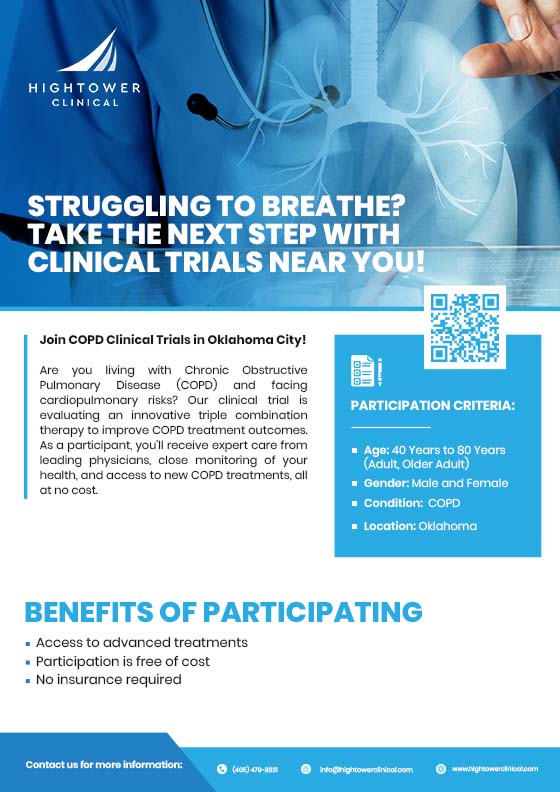
Breathe Easier: Join a COPD Clinical Trial Today
Be part of transformative research in Chronic Obstructive Pulmonary Disease (COPD)! Hightower Clinical is evaluating investigational treatments to improve breathing and quality of life for those living with moderate to severe COPD. If you or a loved one is affected by COPD, this is your opportunity to contribute to the development of potentially life-changing therapies. Click below to learn more and enroll!
COPD vs Contagious Respiratory Illnesses: What’s the Difference?
It helps to compare COPD with other contagious lung conditions, so the differences become clear. Below is a simple table to break it down.
| Feature | COPD | Contagious Respiratory Illness (e.g., Flu, TB) |
|---|---|---|
| Cause | Long-term lung damage from smoke, pollution, or genetics | Virus or bacteria |
| Spreads person to person | No | Yes |
| Onset | Gradual, over years | Often sudden, within days |
| Treatment | Managed long-term, not cured | Often treatable or curable with medication |
| Risk to others | None | Can infect people nearby |
Can You Live Safely with Someone Who Has COPD?
Absolutely. You don’t need to isolate yourself from a family member or partner with COPD. Your support matters. Helping with daily tasks, encouraging them to stick to their COPD care plan, and simply being there can make a meaningful difference in managing the condition and improving their quality of life.
However, there are a few practical things worth keeping in mind:
- Avoid smoking around them, since secondhand smoke can worsen their symptoms.
- Help reduce exposure to dust, strong fumes, or air fresheners that may irritate their lungs.
- Encourage them to get flu and pneumonia vaccines, since these infections are riskier for people with COPD.
- Support good hand hygiene during cold and flu season to protect them from illnesses they might catch more easily.
None of these steps are about protecting yourself from COPD. They’re about protecting your loved one from the illnesses that could make their condition worse.
COPD Clinical Trials: Another Path Forward
Beyond standard treatment, many patients are turning to clinical trials to access new COPD therapies before they hit the market. Clinical trials test new medications, inhalers, and treatment approaches under close medical supervision, often at no cost to participants.
Joining a COPD clinical trial can offer a few real benefits:
- Access to newer treatments not yet widely available.
- Close monitoring from a dedicated medical team throughout the study.
- The chance to contribute to research that helps future COPD patients.
- In many cases, study-related exams, visits, and medication are provided free of charge.
Not everyone qualifies for every trial. Eligibility usually depends on your COPD stage, current medications, and overall health. If you’re curious, talk to your doctor or search a trusted clinical trial registry to see what’s currently enrolling in your area.
Final Thoughts
So, is COPD contagious? No, and now you know exactly why. It’s a disease built up from years of lung damage, not something that spreads between people. If you have a loved one living with COPD, you can offer support without any fear of catching the condition yourself.
If you or a loved one has been diagnosed with COPD, speaking with a pulmonologist is an important first step toward finding the right treatment plan. Healthy lifestyle changes, proper medical care, and ongoing monitoring can help manage symptoms and improve quality of life.
For those interested in emerging treatment options, participating in a pulmonology research study at Hightower Clinical may also be worth discussing with your healthcare provider.
Frequently Asked Questions
Is COPD contagious through coughing?
No. Coughing from a COPD patient does not release any virus or bacteria that causes COPD in another person. Coughing spreads contagious illnesses like colds or flu, not COPD itself.
Can you get COPD from second-hand smoke?
Yes, but not because it’s contagious. Long-term exposure to secondhand smoke can damage your own lungs over the years and raise your personal risk of developing COPD. This is direct harm from smoke, not transmission from a sick person.
Is COPD hereditary?
In most cases, no. Smoking and environmental exposure cause the vast majority of cases. A small percentage trace back to a genetic condition called alpha-1 antitrypsin deficiency, which can run in families.
Can two people in the same house both get COPD?
Yes, but usually because they share the same risk factors, such as both smoking or both being exposed to the same polluted air or occupational dust, not because one passed it to the other.
Is COPD the same as asthma?
No. Both affect breathing, but they are different conditions with different causes, disease processes, and treatment approaches. Some people, however, can have features of both and develop asthma COPD overlap syndrome.