
Participants undergo screening tests and are assigned to either the investigational treatment group or a standard-of-care group. Throughout the study, you’ll attend regular visits for bloodwork, imaging, physical exams, and safety monitoring.
mCRPC Clinical Trial in Oklahoma City
Clinical trials on advanced prostate cancer, where your participation could help shape future treatment options.
Enroll Now
Living With Metastatic Castration-Resistant Prostate Cancer?
You may qualify for an mCRPC clinical trial at Hightower.
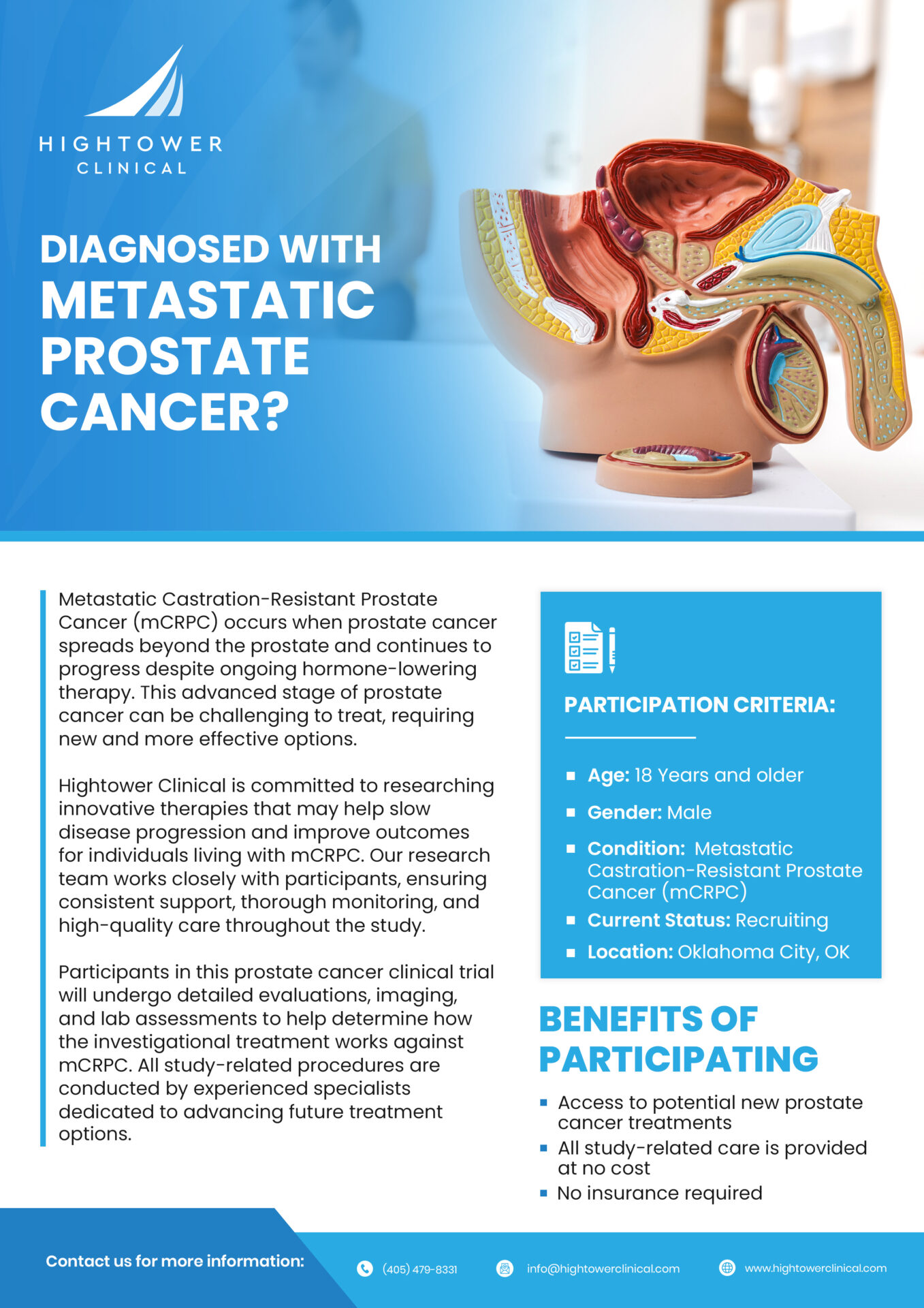
Metastatic castration-resistant prostate cancer (mCRPC) occurs when prostate cancer spreads beyond the prostate and continues to grow despite ongoing hormone-lowering therapy. This advanced stage is challenging to treat, and many patients eventually need new options when current therapies stop working.
Hightower Clinical is enrolling participants for a research study evaluating an investigational treatment combination designed for adults with chemotherapy-naïve mCRPC. The goal is to explore whether this new approach may help control disease progression and offer another option for patients who have limited alternatives.
*Participation in the Clinical Trial is completely free of cost and is your choice.
*To participate, fill out the form, and someone from our research staff will call you to determine your eligibility for the Clinical Research Study.
Study Information
Prostate Cancer Clinical Trials
| Study Name | Protocol Number | Sponsor |
|---|---|---|
| mCRPC Clinical Trial | 20230239 | Industry Sponsor |
20230239 | Amgen |
About the mCRPC Clinical Trials
This Phase 3 clinical trial is designed for adults diagnosed with metastatic castration-resistant prostate cancer who have not yet received chemotherapy. The study compares an investigational treatment approach with currently available standard-of-care options to determine whether the new therapy can help patients live longer or slow cancer progression more effectively.
Participants will receive either the investigational treatment or a standard therapy selected by the study physician. Because the trial is open-label, both participants and the research team will know which treatment is being administered. By joining this study, eligible adults may gain access to new treatment strategies aimed at improving care for advanced prostate cancer.
*All study procedures and study-related treatment, including the investigational drug, are free of cost, and insurance is not required to participate.
*The study doctor will take you through every step of the Clinical Trial before you decide to participate and will answer any questions you have about the study treatment.
Prostate Cancer Research Study: What to Expect?
If you choose to participate, the study team will review the Informed Consent Form with you, outlining all procedures, possible risks, and expectations. You’ll have the opportunity to ask questions before deciding whether to enroll.
After consent, screening tests will confirm eligibility, including imaging, lab work, and a review of medical history. Qualified participants will be assigned to either the investigational treatment group or a standard-of-care group based on study guidelines.
Throughout the study, you’ll attend scheduled visits for physical exams, blood tests, imaging scans, and health assessments. The research team will closely monitor your response, manage side effects, and provide guidance on staying consistent with ongoing hormone-lowering therapy.
* Study-related care is offered at no charge. Expert physicians and healthcare professionals conduct thorough physical exams and assessments.

Age
18+
Gender
Male
Condition
Metastatic Castration-Resistant Prostate Cancer (mCRPC)
Current Status
Recruiting
What Happens in mCRPC?
mCRPC develops when prostate cancer spreads beyond the prostate and continues growing despite medication that lowers testosterone. At this stage, the cancer becomes more aggressive and harder to control, often requiring multiple treatment approaches over time.
Complications
- Bone Pain: Cancer frequently spreads to bones, causing persistent pain and fractures.
- Organ Damage: Tumors may impact the liver, lungs, or lymph nodes.
- Urinary Symptoms: Blockage or swelling can cause difficulty urinating.
- Fatigue: Cancer progression and treatment demands can lead to severe tiredness.
- Weight Loss: Loss of appetite and muscle mass are common as the disease advances.
Symptoms
- Back or Hip Pain: Often the first sign of metastatic spread.
- Weakness or Numbness: Caused by nerve compression from bone lesions.
- Trouble Urinating: A sign of tumor growth near the bladder or urethra.
- Swelling in Legs: Related to lymph node involvement.
- Unexplained Fatigue: May indicate disease progression or anemia.
Frequently Asked Questions
Can I join the mCRPC clinical trial if I’ve already received other treatments?
Eligibility varies, but this study is designed for adults with metastatic castration-resistant prostate cancer who are chemotherapy-naïve and continuing hormone-lowering therapy. The research team will review your medical history to confirm if you qualify.
Why participate in an mCRPC clinical trial?
You may gain access to new treatment options for metastatic prostate cancer that are not yet widely available. Participants also receive close medical monitoring, while helping advance research for future prostate cancer therapies.
Unlock New Opportunities in Clinical Research - Join Today!
We're here and eager to assist. Reach out to Hightower Clinical Research in Oklahoma City, OK for further details on how we can support you.


Get Involved Today!

© Copyright 2026 – Hightower Clinical. CREATED BY DIGITAL AUXILIUS.