
You’ll be randomized to either the investigational therapy (combination) or physician’s-choice therapy, and you’ll be closely monitored through regular visits, labs, and exams.
Breast Cancer Clinical Trial in Oklahoma City
Clinical trials on aggressive breast cancer, where your participation could help pave the way for better treatments.
Enroll Now
Living With Triple-Negative Breast Cancer After Surgery?
You may qualify for breast cancer research at Hightower Clinical.
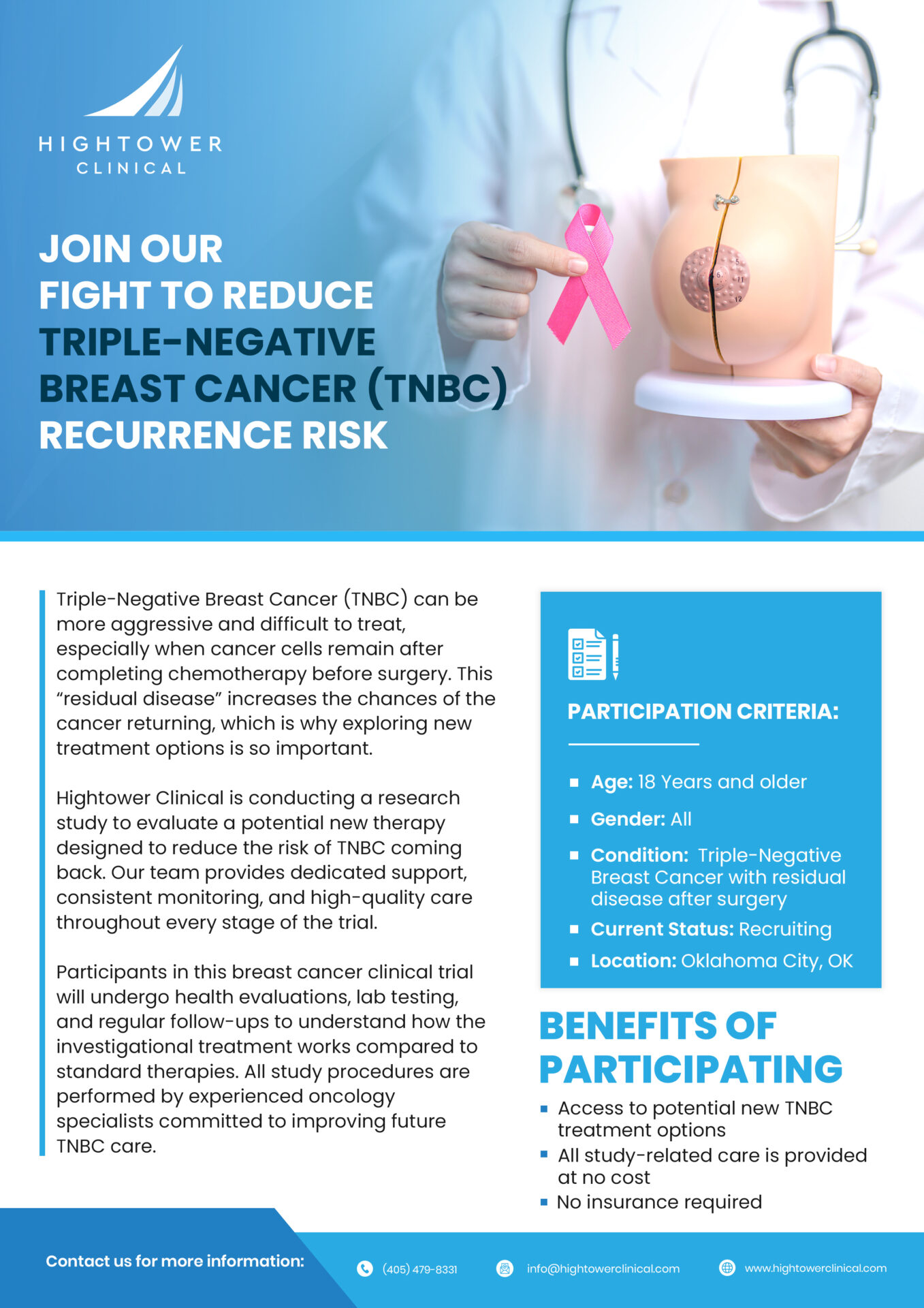
Triple-negative breast cancer (TNBC) is a more aggressive subtype of breast cancer, and even after chemotherapy before surgery, some patients still have cancer cells left behind. This leftover cancer (called “residual disease”) can raise the risk of the cancer coming back.
At Hightower Clinical, we’re conducting a study to explore new treatment options for people who still have cancer after surgery, helping reduce the risk of recurrence.
*Participation in the Clinical Trial is completely free of cost and is your choice.
*To participate, fill out the form, and someone from our research staff will call you to determine your eligibility for the Clinical Research Study.
Study Information
Breast Cancer Clinical Trials
| Study Name | Protocol Number | Sponsor |
|---|---|---|
| TNBC Clinical Trial | MK2870-012 | Merck Sharp & Dohme LLC |
About the TNBC Clinical Trial
In partnership with leading oncology researchers, Hightower Clinical is running a Phase 3, randomized, open-label study for people with triple-negative breast cancer who received chemotherapy before their surgery but did not achieve a complete response (meaning some cancer remained).
This study compares two approaches: one group will receive the investigational therapy (a targeted therapy plus immunotherapy), and the other group will receive treatment of physician’s choice, which may include immunotherapy alone or immunotherapy plus chemotherapy.
The main goal is to test whether the new combination can improve invasive disease-free survival; that is, how long people remain free of cancer coming back or spreading compared to standard treatment.
*All study procedures and study-related treatment, including the investigational drug, are free of cost, and insurance is not required to participate.
*The study doctor will take you through every step of the Clinical Trial before you decide to participate and will answer any questions you have about the study treatment.
Advanced TNBC Treatment Research Study: What to Expect?
If you decide to join, you’ll first be asked to sign an Informed Consent Form that describes all study procedures, potential risks, and your rights. Our study team will walk you through everything and answer your questions before you enroll.
After giving consent, participants undergo screening to check eligibility, including lab tests, imaging, and a review of prior treatment and surgical pathology. Those who qualify are then randomized into one of the two study arms: the combination therapy group or the physician’s-choice group.
During the trial, you’ll attend regular follow-up visits. These will include physical exams, blood work, check-ins on side effects, and possibly imaging or other assessments. The care is conducted by experienced oncology specialists, and all study-related procedures are provided at no cost.
* Study-related care is offered at no charge. Expert physicians and healthcare professionals conduct thorough physical exams and assessments.

Age
18+
Gender
All Sexes
Condition
Triple-Negative Breast Cancer (residual cancer after surgery)
Current Status
Recruiting
What Happens in Triple Negative Breast Cancer?
Triple Negative Breast Cancer (TNBC) is a type of breast cancer that lacks three key receptors: estrogen, progesterone, and HER2.
Without these receptors, TNBC does not respond to hormonal therapies or drugs that target HER2, making it more aggressive and harder to treat. The cancer cells tend to grow quickly and are more likely to spread to other parts of the body.
Complications
- Metastasis: TNBC can spread rapidly to the lungs, liver, brain, or bones, which makes treatment more challenging.
- Recurrence: Even after treatment, TNBC has a higher chance of coming back compared to other breast cancer types.
- Treatment Side Effects: Chemotherapy, the main treatment option, can cause fatigue, nausea, hair loss, and increased risk of infections.
- Emotional Impact: The aggressive nature of TNBC and limited treatment options can lead to anxiety, depression, and stress.
Symptoms & Challenges
- Lump or Mass: A noticeable lump in the breast or underarm is often the first sign.
- Changes in Breast Shape or Skin: Swelling, dimpling, redness, or thickening of the breast skin may occur.
- Pain or Tenderness: Some people may experience discomfort, though TNBC can also be painless in early stages.
- Rapid Progression: TNBC grows and spreads faster than other breast cancers, which can make early detection and treatment crucial.
- Limited Treatment Options: Hormone therapy and HER2-targeted treatments are ineffective, leaving chemotherapy, surgery, and radiation as the main approaches.
Frequently Asked Questions
Can I join if I already got chemotherapy before my surgery?
Yes, this trial is specifically for patients who received neoadjuvant therapy and did not achieve a complete response after surgery.
Why participate in this breast cancer clinical trial?
By participating, you may access a new treatment combination that could reduce your risk of recurrence, while helping researchers develop better options for future TNBC patients.
Unlock New Opportunities in Clinical Research - Join Today!
We're here and eager to assist. Reach out to Hightower Clinical Research in Oklahoma City, OK for further details on how we can support you.


Get Involved Today!
© Copyright 2026 – Hightower Clinical. CREATED BY DIGITAL AUXILIUS.