
SLE (Systemic Lupus Erythematosus) is a chronic autoimmune disease where the immune system attacks the body, causing inflammation and damage to organs like the skin, joints, kidneys, and lungs.
Systemic Lupus Erythematosus
Hightower Clinical conducted studies to evaluate the effectiveness of a new study drug in improving the symptoms for patients living with Systemic Lupus Erythematosus (SLE).
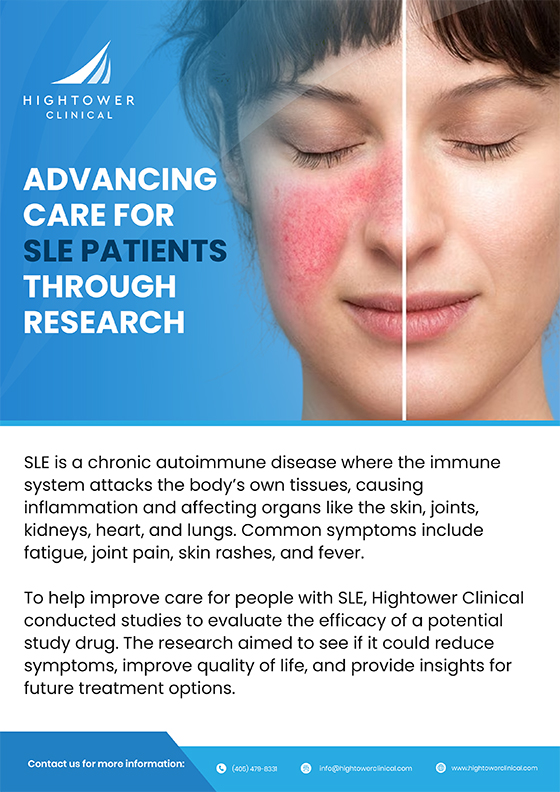
Innovative Clinical Study on Systemic Lupus Erythematosus
Systemic Lupus Erythematosus, or SLE, is a chronic autoimmune disease in which the body’s immune system mistakenly attacks its own tissues. This can lead to inflammation and damage to organs such as the skin, joints, kidneys, heart, and lungs. Symptoms often include fatigue, joint pain, skin rashes, and fever, and they can vary widely from person to person.
Hightower Clinical conducted studies to evaluate a new investigational therapy for patients with SLE who had already received standard care. The trials aimed to explore whether this therapy could help improve SLE symptoms and overall quality of life, while also contributing to a better understanding of the disease and potential future treatment options.
Current Status
Not Recruiting
Study Count
1
Study Information
Systemic Lupus Erythematosus
| Study Name | Protocol Number | Sponsor |
|---|---|---|
| Systemic Lupus Erythematosus (SLE) | 230LE303 | Biogen |
Frequently Asked Questions
What are the benefits of participating in SLE trials?
Participating helps advance research, improve understanding of SLE, and may give access to new treatments that could improve symptoms and quality of life.
What are the risk factors for SLE?
SLE is more common in women, especially between ages 15–45 and may run in families. Certain genes, hormones, and environmental factors can increase risk.
What happens if SLE is untreated?
Untreated SLE can cause serious organ damage, complications, and reduce quality of life. Early diagnosis and treatment help manage symptoms and prevent long-term harm.
Unlock New Opportunities in Clinical Research - Join Today!
We're here and eager to assist. Reach out to Hightower Clinical Research in Oklahoma City, OK for further details on how we can support you.


Get Involved Today!

© Copyright 2024 – Hightower Clinical. CREATED BY DIGITAL AUXILIUS.