
Superficial femoral artery stenosis is a narrowing or blockage of the main artery in the thigh, caused by plaque buildup. It restricts blood flow to the leg, causing pain, mobility issues, and in severe cases, tissue damage or amputation risk.
Superficial Femoral Artery Stenosis Clinical Trials in Oklahoma City, OK
Participate in our peripheral artery disease clinical trials to help advance research for a potential new treatment to manage leg artery blockages more effectively.
Enroll Now
Leg Pain, Poor Blood Circulation & Limited Mobility?
You might qualify for our SFA Stenosis Research Study
Superficial femoral artery stenosis is a condition where the main artery running through the thigh becomes narrowed or blocked, severely limiting blood flow to the leg. Despite existing treatments, many patients continue to experience pain, limited mobility, and the risk of repeat procedures.
At Hightower Clinical, we are currently conducting a leg artery blockage clinical study to assess the safety and effectiveness of an investigational device designed for individuals living with superficial femoral artery stenosis.
Participation in the clinical trial is completely free of charge and entirely voluntary.
To participate, fill out the form, and a member of our research team will contact you to determine your eligibility for the study.
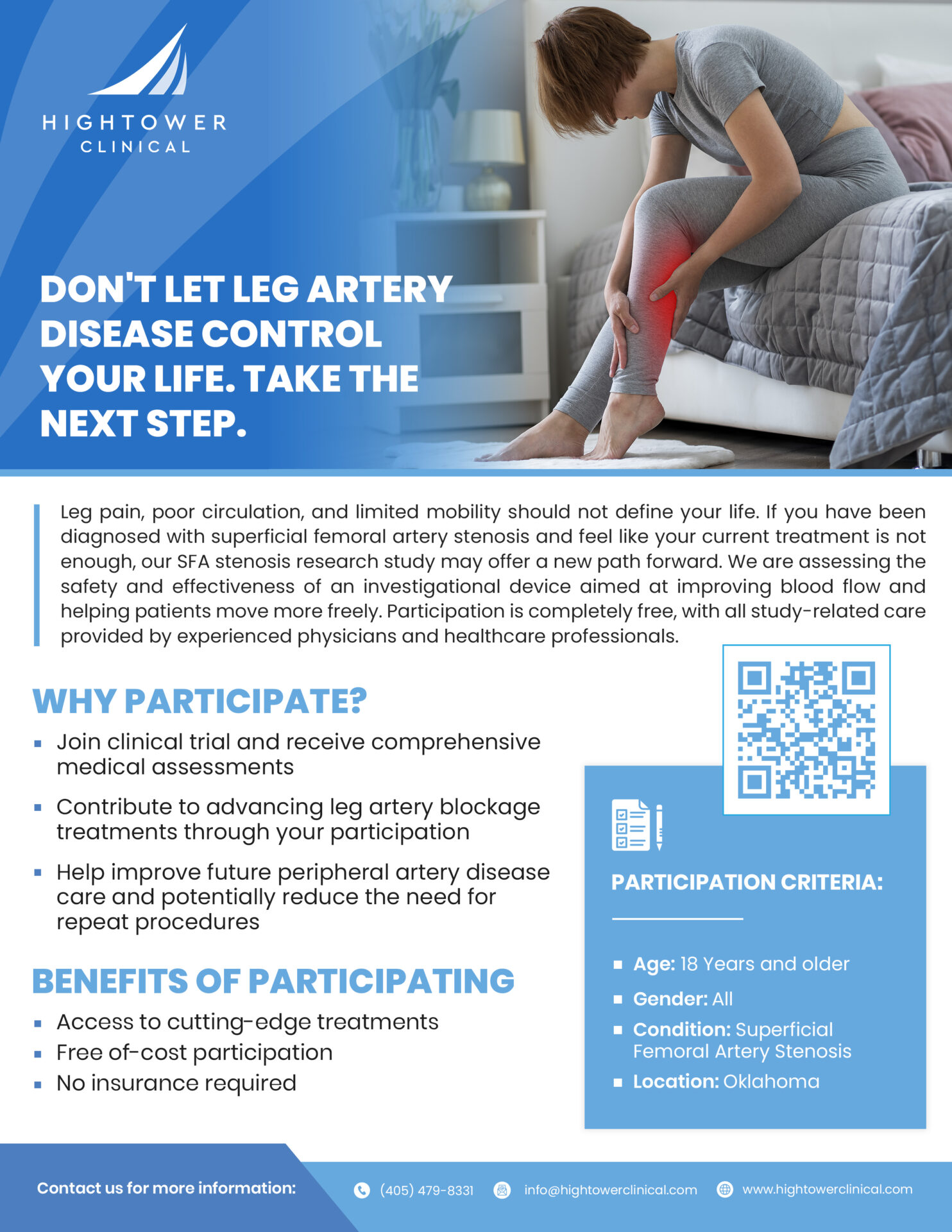
About the Superficial Femoral Artery Stenosis Clinical Trial
Hightower Clinical is conducting a research study on new treatments for superficial femoral artery stenosis. The study intends to evaluate the safety and efficacy of an investigational drug-coated balloon device for individuals diagnosed with peripheral artery disease affecting the leg.
This SFA stenosis research study aims to assess whether the investigational device can more effectively open blocked leg arteries and reduce the likelihood of the artery narrowing again over time.
Participants will be randomly divided into two groups: one group will receive the investigational device, while the other will receive a standard balloon treatment.
All study procedures and treatments, including the investigational drug, are provided at no cost, and insurance is not required to participate.
The study doctor will guide you through every step of the clinical trial, answering any questions you may have about the study treatment before you make your decision to participate.
SFA Stenosis Research: What to Anticipate
Upon agreeing to participate in the study, you will be asked to sign an Informed Consent Form that provides comprehensive details about this peripheral artery disease clinical trial. Our research team will also guide you through the study process and explain your role in the trial. We strongly encourage participants to ask any questions they may have before deciding to participate or withdraw from the trial.
Once the consent form is signed and all questions are addressed, participants will be randomly assigned to one of two groups: the Control group or the Experimental group.
In the Control group, participants will receive a standard balloon angioplasty procedure, while those in the Experimental group will receive the investigational drug-coated balloon device. This study is double-blind, meaning neither the researcher nor the participant knows which treatment is being administered.
Study-related care is provided free of charge. Expert physicians and healthcare professionals will perform thorough physical exams and assessments throughout the trial.

Age
18 years and older
Gender
All
Condition
Superficial Femoral Artery Stenosis
Current Status
Recruiting
What Happens in Superficial Femoral Artery Stenosis?
Superficial femoral artery stenosis occurs when the main artery supplying blood to the thigh and lower leg becomes narrowed or blocked, usually due to a buildup of fatty deposits on the artery walls. This reduces blood flow to the leg muscles and tissues, causing pain, weakness, and difficulty walking. If left untreated, the condition can worsen significantly over time.
Complications
If left untreated, reduced blood flow to the leg can lead to serious and lasting consequences, including:
- Chronic Limb Pain: Persistent pain in the leg even at rest, severely impacting quality of life.
- Non-Healing Wounds: Poor circulation can prevent sores or injuries on the foot and leg from healing properly.
- Muscle Weakness: Reduced blood supply leads to muscle deterioration and loss of strength in the affected leg.
- Amputation Risk: In severe cases, critical limb ischemia can result in the need for partial or full leg amputation.
- Increased Risk of Heart Attack or Stroke: Peripheral artery disease is often a sign of widespread arterial disease affecting the heart and brain.
Symptoms
Common symptoms of superficial femoral artery stenosis include:
- Leg pain, cramping, or aching during walking or physical activity that goes away with rest
- Numbness or weakness in the leg or foot
- A feeling of heaviness or fatigue in the legs during everyday activity
- Coldness in the lower leg or foot compared to the other side
- Slow-healing sores or wounds on the toes, feet, or legs
- Skin color changes on the leg, such as paleness or a bluish tint
- Weak or absent pulse in the leg or foot
- Shiny, smooth skin on the leg or thickened toenails
Frequently Asked Questions
What happens during the SFA Stenosis clinical trial?
After screening and consent, participants are assigned to receive either the investigational drug-coated balloon or a standard balloon procedure. Regular follow-up visits monitor artery health and recovery. All visits, procedures, and study-related care are provided at no cost throughout the trial.
Why participate in the Superficial Femoral Artery Stenosis clinical trial?
Participating gives you access to potentially more effective treatment and comprehensive medical monitoring at no cost. Your involvement directly contributes to advancing new treatments for leg artery blockage clinical studies that could improve mobility and quality of life for future patients.
Unlock New Opportunities in Clinical Research - Join Today!
We're here and eager to assist. Reach out to Hightower Clinical Research in Oklahoma City, OK for further details on how we can support you.


Get Involved Today!
© Copyright 2026 – Hightower Clinical. CREATED BY DIGITAL AUXILIUS.