
Adults 18 and older with refractory metastatic colorectal cancer, regardless of gender, may qualify for the study. Eligibility will be confirmed through screening by the study team.
Refractory Metastatic Colorectal Cancer Clinical Trials
Hightower Clinical is conducting refractory metastatic colorectal cancer clinical trials to study how often high blood pressure occurs during treatment in minority groups.
Enroll Now
Clinical Trials for Metastatic Colon Cancer
Refractory metastatic colorectal cancer (mCRC) is a form of colorectal cancer that has spread to other parts of the body and no longer responds to standard treatments. People often reach this stage after trying multiple therapies such as chemotherapy, targeted drugs or immunotherapy without seeing further improvement. It can be challenging to manage, and symptoms may continue to affect daily life as the disease progresses.
Clinical trials are currently taking place for refractory metastatic colorectal cancer, offering opportunities to contribute to advancing treatment options. If you or a loved one is facing this stage of cancer, participating in a clinical study for advanced colon cancer may offer access to potential new therapies and close monitoring from experienced clinical teams.
Study Information
Refractory Metastatic Colorectal Cancer Clinical Trials
| Study Name | Protocol Number | Sponsor |
|---|---|---|
| Colorectal Cancer | TAK-113-4002 | Takeda |
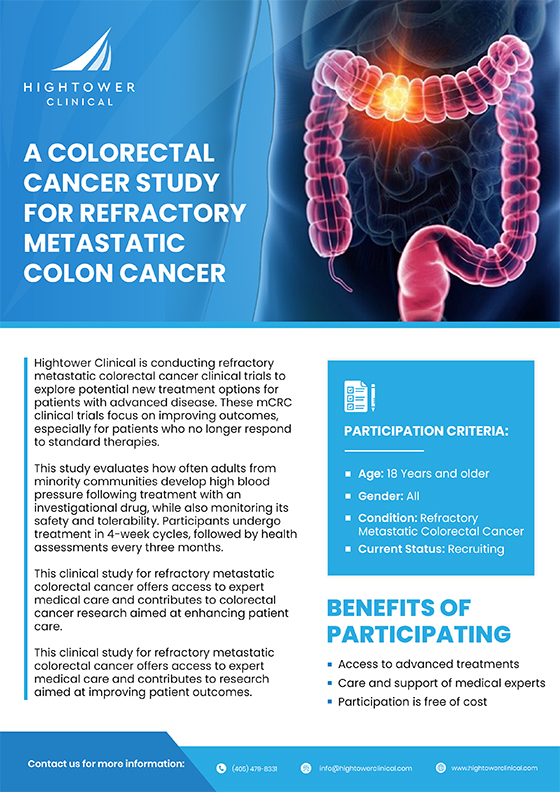
Investigating Blood Pressure Challenges in Refractory Metastatic Colorectal Cancer
Managing high blood pressure is an important part of care for people with refractory metastatic colorectal cancer. This colorectal cancer research study looks at how often adults from minority communities develop high blood pressure during treatment and assesses the safety of an investigational drug. The goal is to gather useful information that may guide better care in future mCRC clinical trials.
Participants receive the investigational treatment in 4-week cycles and continue as long as it works well for them. Treatment ends if their condition worsens or they decide to stop. Afterward, follow-ups every three months help monitor their health and collect meaningful data.
What to Expect
If you choose to participate, you’ll start by reviewing and signing an Informed Consent Form that explains the study in detail. Our research team will guide you through the process, answer your questions, and make sure you feel confident about your decision to join or withdraw at any time.
Once enrolled, you will receive the investigational treatment under close supervision. Your health will be monitored regularly through exams and evaluations by experienced physicians throughout the study.
By participating, you may contribute to the development of future treatment options for patients with refractory metastatic colorectal cancer.

Age
18 Years and older
Gender
All
Condition
Refractory Metastatic Colorectal Cancer
Current Status
Recruiting
Symptoms of Refractory Metastatic Colorectal Cancer
People with refractory metastatic colorectal cancer may experience a variety of symptoms, ranging from digestive issues to overall fatigue and weakness.
Abdominal and Bowel-Related Symptoms
- Persistent abdominal pain, cramps, or discomfort
- Bloating, gas, or a feeling of fullness after small meals
- Changes in bowel habits, such as diarrhea, constipation, or altered stool shape
- Rectal bleeding or blood in the stool
- A sensation that the bowel doesn’t empty completely
- Unexplained weight loss
Systemic Symptoms
- Ongoing fatigue or tiredness
- Weakness
- Loss of appetite
- Anemia from iron deficiency, which can worsen fatigue and weakness
Frequently Asked Questions
What does participation involve?
Participants receive the investigational treatment in 4-week cycles, undergo regular health monitoring, and follow-ups every three months. All study-related care is provided free of charge.
What is the purpose of this clinical trial?
The study aims to understand how often high blood pressure occurs during treatment in minority communities and to assess the safety and effectiveness of the investigational drug.
Unlock New Opportunities in Clinical Research - Join Today!
We're here and eager to assist. Reach out to Hightower Clinical Research in Oklahoma City, OK for further details on how we can support you.


Get Involved Today!

© Copyright 2024 – Hightower Clinical. CREATED BY DIGITAL AUXILIUS.