
Hereditary hemochromatosis is a genetic disorder caused by HFE gene mutations that leads to excessive iron absorption from food. Over time, iron builds up in vital organs, causing serious complications if left untreated. It is most common in people of Northern European descent.
Hereditary Hemochromatosis Clinical Trials in Oklahoma City, OK
Join our Hemochromatosis research study to help advance research for a potential new treatment to manage hereditary iron overload more effectively.
Enroll Now
Living with Iron Overload?
You might qualify for our Iron Overload Disorder Clinical Study
Hereditary hemochromatosis is a genetic condition that causes the body to absorb too much iron, leading to dangerous iron buildup in vital organs like the liver, heart, and pancreas. Despite current treatment options, many patients face a lifelong routine of blood draws with no cure in sight.
At Hightower Clinical, we are currently conducting a research study for iron overload disease treatment to assess the safety and effectiveness of an investigational oral medication designed for adults living with hereditary hemochromatosis.
Participation in the clinical trial is completely free of charge and entirely voluntary.
To participate, fill out the form, and a member of our research team will contact you to determine your eligibility for the study.
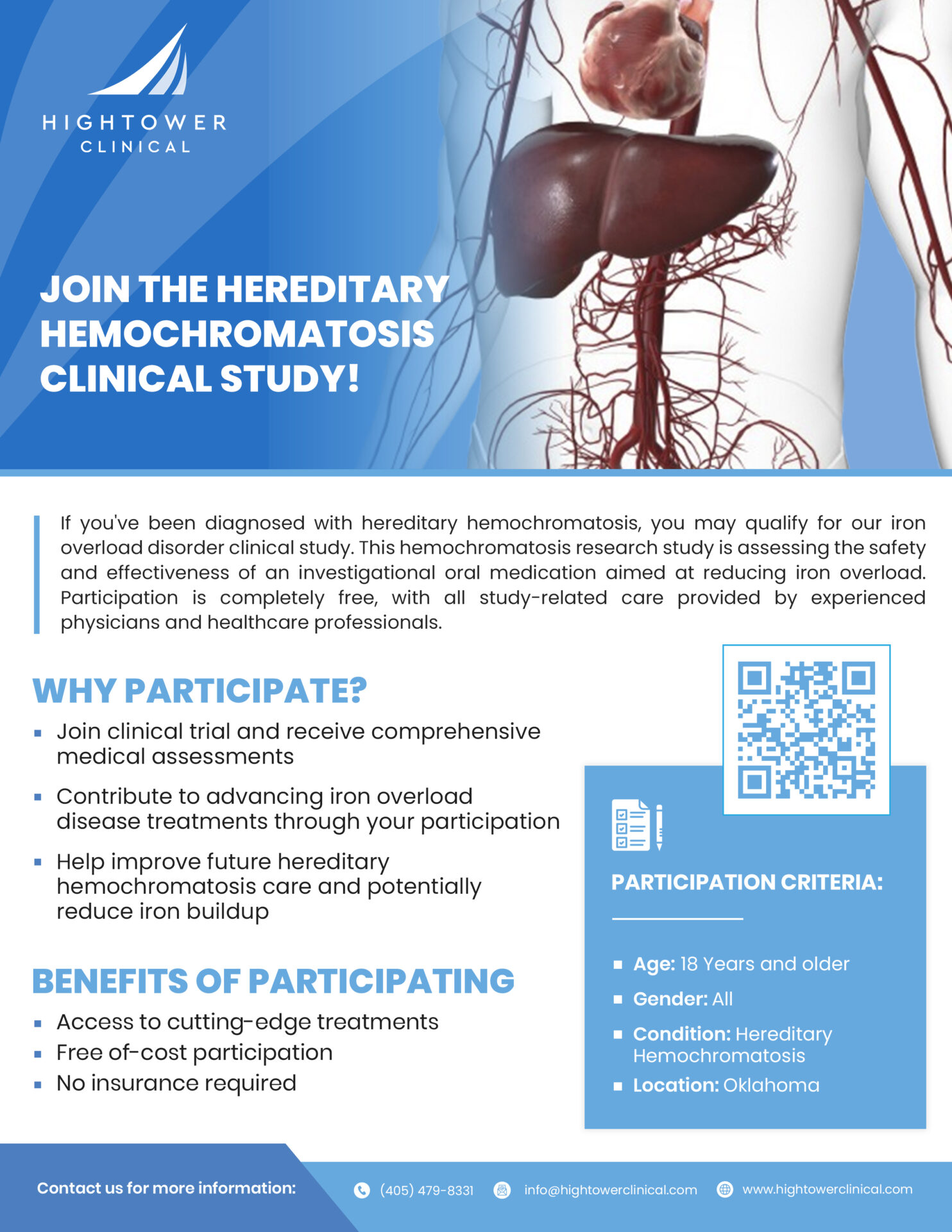
About the Hereditary Iron Storage Disorder Clinical Trial
Hightower Clinical is conducting a hemochromatosis research study for adults diagnosed with hereditary hemochromatosis. The study intends to evaluate the safety and efficacy of an investigational oral medication for individuals living with this hereditary iron storage disorder.
This iron overload disorder clinical study aims to assess whether a once-daily oral pill can effectively reduce iron overload in the body and potentially reduce the need for regular therapeutic blood draws.
Participants will be randomly divided into groups: one group will receive the investigational drug, while another will receive a placebo.
All study procedures and treatments, including the investigational drug, are provided at no cost, and insurance is not required to participate.
The study doctor will guide you through every step of the clinical trial, answering any questions you may have about the study treatment before you make your decision to participate.
Hereditary Hemochromatosis Research: What to Expect
Upon agreeing to participate in the study, you will be asked to sign an Informed Consent Form that provides comprehensive details about this hereditary hemochromatosis clinical trial. Our research team will also guide you through the study process and explain your role in the trial. We strongly encourage participants to ask any questions they may have before deciding to participate or withdraw.
Once the consent form is signed and all questions are addressed, participants will be randomly assigned to one of two groups: the Control group or the Experimental group.
In the Control group, participants will receive a placebo medication without active ingredients, while those in the Experimental group will receive the actual study drug containing active ingredients. This study is double-blind, meaning neither the researcher nor the participant knows which treatment is being administered.
Study-related care is provided free of charge. Expert physicians and healthcare professionals will perform thorough physical exams and assessments throughout the trial.

Age
18 years and older
Gender
All
Condition
HFE-Related Hereditary Hemochromatosis
Current Status
Recruiting
What Happens in Hereditary Hemochromatosis?
Hereditary hemochromatosis is a genetic condition in which the body absorbs far more iron from food than it actually needs. Normally, the body carefully regulates how much iron it takes in but in people with an HFE gene mutation, this system breaks down, and iron slowly accumulates in the body’s tissues and organs over many years.
Complications
If left untreated, excess iron can cause serious and lasting damage to multiple organs, including:
- Liver Disease: Iron buildup in the liver can lead to scarring (cirrhosis) and an increased risk of liver cancer.
- Diabetes: Iron deposits in the pancreas can impair insulin production and blood sugar regulation.
- Heart Problems: Excess iron in the heart can lead to irregular heartbeat or heart failure.
- Joint Pain: Iron accumulation in the joints can cause chronic pain and stiffness, particularly in the hands.
- Fatigue and Weakness: Persistent tiredness is one of the most common early symptoms.
- Hormonal Changes: Iron buildup in hormone-producing glands can affect sexual function, fertility, and mood.
Symptoms
Common symptoms of hereditary hemochromatosis include:
- Unexplained weight loss
- Abdominal pain or discomfort
- Brain fog or difficulty concentrating
- Skin that appears bronze or gray in color
- Decreased sex drive or sexual dysfunction
- Chronic fatigue or persistent lack of energy
- Elevated liver enzymes found on routine blood tests
- Joint pain or stiffness, especially in the hands and fingers
Many people with hemochromatosis have no symptoms in the early stages, which is why genetic testing and early detection are so important.
Frequently Asked Questions
What happens during the Hereditary Hemochromatosis clinical trial?
After screening and consent, participants are randomly assigned to receive either the investigational medication or a placebo. Regular clinic visits monitor iron levels and overall health. All visits, lab tests, and treatments are provided at no cost throughout the study.
Why participate in the Hereditary Hemochromatosis clinical trial?
Participating gives you access to close medical monitoring and study-related care at no cost, while contributing to potential new treatments for this hereditary iron storage disorder. Your involvement directly helps advance research that could improve outcomes for future patients.
Unlock New Opportunities in Clinical Research - Join Today!
We're here and eager to assist. Reach out to Hightower Clinical Research in Oklahoma City, OK for further details on how we can support you.


Get Involved Today!
© Copyright 2026 – Hightower Clinical. CREATED BY DIGITAL AUXILIUS.