
Adults ages 18–75 who have Graves’ disease and remain hyperthyroid despite taking antithyroid medication may be eligible. The study team will perform screenings to confirm eligibility before enrollment.
Graves’ Disease Clinical Trials
Hightower Clinical is conducting a Clinical study for Graves’ disease to check the safety and efficacy of an investigational drug.
Enroll Now
A Potential New Approach to Managing Graves’ Disease
Graves’ disease is a chronic autoimmune condition that causes the thyroid to produce too much hormone, leading to hyperthyroidism. It occurs when the body creates antibodies that overstimulate the thyroid gland. This condition is one of the most common causes of an overactive thyroid, especially in people with a family history of thyroid problems.
Early medical evaluation and treatment are important to manage symptoms and protect overall health.
Hightower Clinical is conducting a research study in adults with Graves’ disease (GD) who remain hyperthyroid despite antithyroid medication. This clinical study for Graves’ disease aims to evaluate the safety, tolerability, and effectiveness of an investigational study drug to help manage Graves’ disease effectively and improve patient outcomes.
Study Information
Graves’ Disease Clinical Trials
| Study Name | Protocol Number | Sponsor |
|---|---|---|
| Graves’ Disease | IMVT1402-2503 | Immunovant Sciences GmbH |
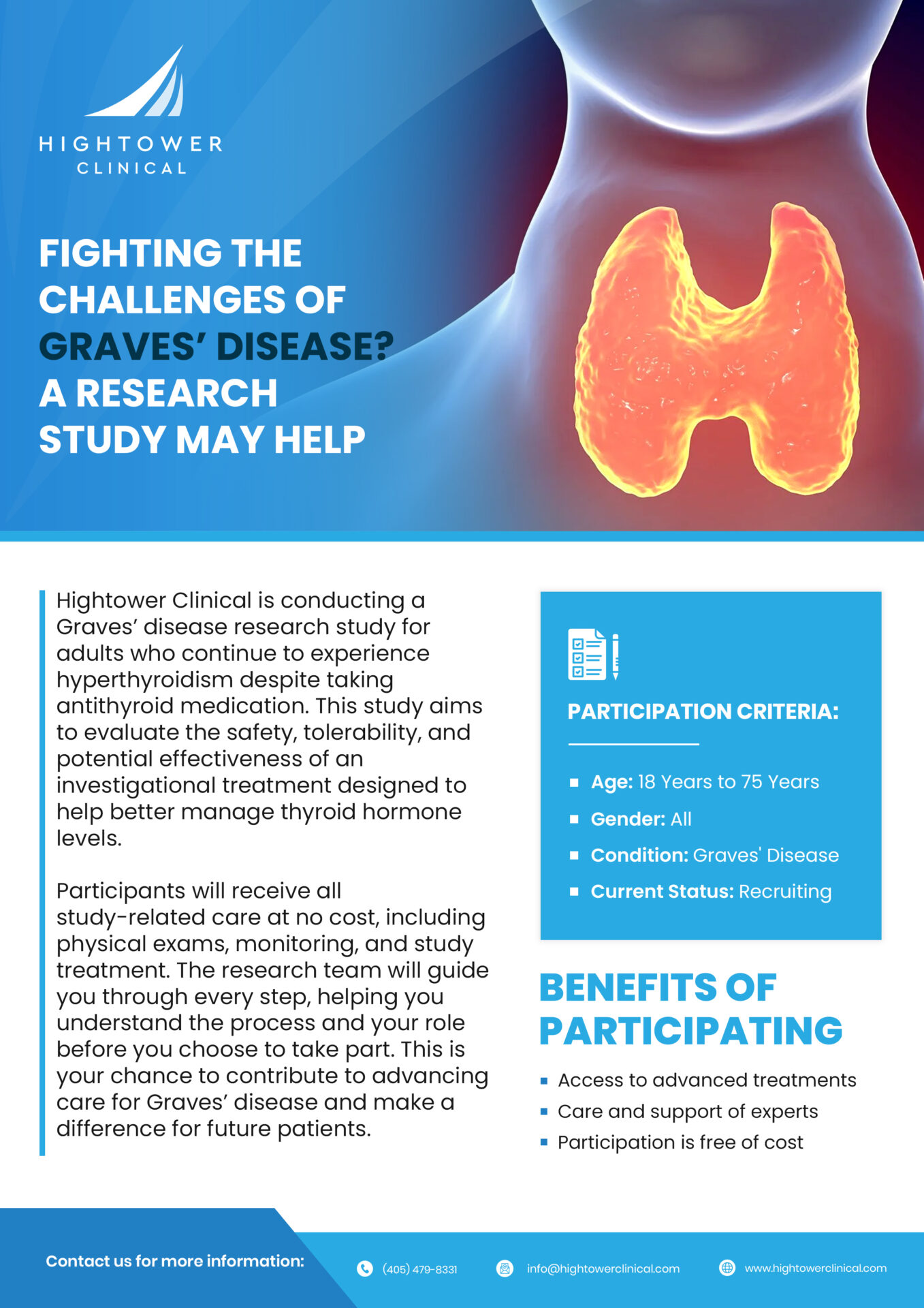
Take Part in Advancing Graves’ Disease Research
Graves’ disease is a chronic autoimmune condition that is 5–10 times more common in women than men and is the leading cause of hyperthyroidism in developed countries. It most often affects adults between 30 and 60 years, and some patients experience spontaneous remission.
Hightower Clinical is conducting a study to evaluate the safety, tolerability, and effectiveness of a study drug in adults with Graves’ disease who remain hyperthyroid despite antithyroid medication. The trial aims to assess how well the study drug helps manage thyroid hormone levels and treatment response.
All study procedures and study-related treatment, including the investigational drug, are free of cost, and insurance is not required to participate.
The study doctor will take you through every step of the Clinical Trial before you decide to participate and will answer any questions you have about the study treatment.
What to Expect
If you decide to participate, you’ll first review and sign an Informed Consent Form that explains the study in detail. Our research team will walk you through the process, answer any questions, and ensure you understand your role before you choose to join or withdraw.
Once enrolled, you’ll be assigned to one of the two groups. One group receives a placebo, while the other receives the study drug. This is a double-blind study, meaning neither you nor the research team will know which treatment you are receiving.
Your participation may help future treatment options for autoimmune thyroid disorders become more effective.
All care related to the study is provided free of charge, with experienced physicians conducting thorough physical exams and evaluations.

Age
18 Years to 75 Years
Gender
All
Condition
Graves' Disease
Current Status
Recruiting
Signs and Symptoms of Graves’ Disease
Graves’ disease can affect many parts of the body, and what you experience may vary from person to person. Common signs and symptoms include:
Symptoms:
- Fatigue or feeling unusually tired
- Feeling nervous, irritable, or unusually anxious
- Heat sensitivity accompanied by heavy sweating
- Reduced sexual desire or erectile dysfunction
- Trouble sleeping
- Unintentional weight loss despite increased appetite
- Frequent bowel movements
Signs:
- Bulging eyes (thyroid eye disease/Graves’ ophthalmopathy)
- Slight tremor in the hands or fingers
- Thickened, discolored skin on shins or tops of feet (Graves’ dermopathy)
- Fast or irregular heartbeat (palpitations)
- Changes in menstrual cycles
- Enlarged thyroid gland (goiter)
Frequently Asked Questions
What costs are involved in joining the study?
There is no cost to participate. All study-related care, tests, and the investigational treatment are provided free of charge, and no insurance is required.
How serious is Graves’ disease?
If Graves’ disease is not treated, it can lead to serious health complications, including pregnancy-related problems, heart issues, weakened bones (osteoporosis), and a rare but life-threatening condition known as thyroid storm.
Unlock New Opportunities in Clinical Research - Join Today!
We're here and eager to assist. Reach out to Hightower Clinical Research in Oklahoma City, OK for further details on how we can support you.


Get Involved Today!
© Copyright 2026 – Hightower Clinical. CREATED BY DIGITAL AUXILIUS.